
New Arguments for a Narrowing Audience
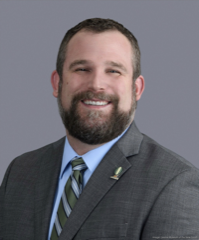
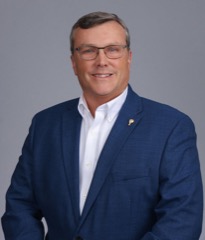
Dr. John H. Falk — Principal, JohnHFalk, LLC
I’ve spent decades studying why people go to museums, what they do once there, and importantly, what meanings they take away from the experience — what they learn, yes, but also what changes in how they feel about themselves and others, and how museums help them achieve their purposes. Of late, I have been working to reframe the benefits of museum-going in ways that might help counter some of the headwinds most museums now face, including flattening visitation, an increasingly hostile policy environment and an ever-more competitive fund-raising landscape.
Key to this work is a reframing in how we might define and talk about the benefits of museum-going. Multiple research studies involving thousands of visitors have now clearly demonstrated that museum experiences result in measurable, long-lasting enhancements to visitors’ personal, intellectual, social, and physical well-being. The research has also shown that visitors perceive that the well-being benefits they gained from visiting a museum have real economic value, on average equal to $540 per visit.
These numbers surprise people, including most of the directors we worked with this past year. It is not that they did not believe that the experiences they provide the public are valuable, it is just that these numbers seem to fly in the face of the economic value most people usually ascribe to a museum experience.
Museum leaders are used to talking about the value of their institutions, as they all are regularly called upon to make the case for their institutions. The museum leader’s toolbox already includes things like economic impact, educational outcomes, and cultural preservation. The data behind these types of arguments are real, and for many stakeholders — board members who already believe in the mission, the museum’s most frequent visitors, arts and humanities councils tracking educational metrics — they have proven to be effective at supporting appeals and value claims. I wouldn’t for a moment suggest museums stop using these data and making these arguments, at least for those for whom these arguments have resonance.
Unfortunately, though, this audience is narrowing. The pool of policymakers, funders, die-hard visitors, and community leaders who already accept that museums deserve public investment is getting smaller. Not because the traditional arguments have gotten worse, but because more of the people you need to persuade don’t share the underlying premise. When a funder (or the public) doesn’t already believe arts and culture merit public support, economic multipliers don’t open the conversation. They reinforce a case that was never in question for the people it reaches — and miss entirely the people it doesn’t.
This report is about what happens when museum leaders add new arguments to the ones they’re already making. Not replacement. Addition. In 2025, Kyle Bowen at Museums as Progress and I launched the Value Articulation Intensive to test exactly that — a cohort where museum directors worked with well-being outcomes research and tested new value framing with their own stakeholders in conversations where the outcome actually mattered — with ministry officials, foundation boards, and capital campaign prospects. This was our first cohort. What they learned will shape how the next group approaches it, and the one after that.
The three contributors to this report each took a different path through that work.
Joan Kanigan (Western Development Museum, Saskatchewan) tested well-being framing with provincial government stakeholders — iterating through approaches, learning what undermined credibility, and arriving at a discipline of separating economic evidence from well-being evidence rather than combining them.
Richard Cooper (Levine Museum of the New South, Charlotte) was navigating a critical foundation relationship and a major capital campaign. His account describes how well-being framing became part of both — and why internal practice had to match external messaging for either to work.
Norman Burns (Conner Prairie, Indiana) offers a longer view. Conner Prairie has had well-being embedded in institutional culture for nearly a decade — from staff onboarding to board education to strategic planning. His section covers what this work looks like when it’s no longer new.
What you’ll find in these sections isn’t a playbook (yet). These are practitioners sharing what they learned from being involved in a workshop focused on these new ideas; and based on that, what they tried, what worked, what didn’t, and what they’d tell a peer walking into a similar conversation.
It’s a set of additional tools — tested by people doing the work — alongside the ones you’re already using. If you’re walking into a room where the traditional case isn’t landing, these accounts might change what you say when you get there.
Dr. John H. Falk
Principal, JohnHFalk, LLC
March 2026
What Government Stakeholders Need to Hear About Museum Value
Joan Kanigan — CEO/Director, Western Development Museum (Saskatchewan)
I’m the CEO of the Western Development Museum, which operates four locations across Saskatchewan. 50% of our funding comes from the Provincial Government, and our board is appointed by the Province. We report up through the Ministry of Parks, Culture and Sport, which means when I present value claims, those numbers need to hold up if the Treasury Board asks questions. So, when speaking with government officials, my focus is less on mission alignment and emotional resonance and more on can the numbers be defended if Finance questions them.
I’ve built strong relationships with our ministry contacts over the years. We can have frank conversations and when something doesn’t land, they’ll tell me — and I can make adjustments without damaging the relationship.
Learning What Lands
During the VAI program, I worked through a few iterations of how to present this information. I tested, learned, and adjusted based on stakeholders’ responses.
First Attempt: Well-Being With Dollar Values
My initial presentation to ministry staff and our board included both traditional economic data — GDP contributions, tourism dollars, employment impact — and well-being outcomes with attached dollar values using the research multipliers from John Falk’s work.
The economic metrics were well received. The ministry is already focused on demonstrating well-being impact across its portfolio, so the 24 well-being outcomes resonated with them. The disconnect came when dollar values entered the picture.
John Falk’s research shows that a single museum visit can produce measurable well-being benefits — and those benefits can be translated into dollar values based on what people would pay to achieve equivalent outcomes. Applied to our visitation numbers, that translated to somewhere between $1 million and $5 million in well-being value annually. The research behind those numbers is solid. But when you present a range that wide, government stakeholders hear uncertainty, not rigor. It’s not that they were questioning the methodology. It’s that the range itself complicated the story I was trying to tell.
Ministry staff referenced a past example in which another cultural organization claimed $20 billion in GDP impact using a Stats Canada multiplier, and the Treasury Board questioned it immediately. Wide ranges trigger that same reflex. I realized I could present the truth more clearly by simply using the conservative end of the research.
The Pivot: Well-Being Without Economic Translation
Rather than abandoning the framework, I separated the components.
Economic value: GDP contributions, labor market impact, tourism dollars — presented as numbers backed by our commissioned market research and actual institutional financials; data that can withstand Treasury Board scrutiny because it’s derived from real budget and spending figures.
Well-being value: presented as research-supported benefits without dollar translation. The 24 well-being outcomes stand on their own merit, especially since the ministry is already tracking well-being indicators across their department.
I’m focusing more on the GDP and the economic numbers that I can back with really clear data. On the well-being side, I can still tie that into why the museum is important. I’m just not affixing a dollar value to it anymore.
I supplemented the research framing with local validation — our audience research showed 60–65% of visitors reported feeling a sense of belonging when visiting the museum. That’s specific to us, not extrapolated from general research.
Testing With Different Stakeholders
After the ministry conversation, I had a meeting scheduled with our city manager in Moose Jaw. I adjusted my approach based on what I’d learned: conservative numbers, no wide ranges, well-being framing without economic translation. The city manager raised no concerns at all.
Different stakeholders have different thresholds. The ministry operates with significant accountability to the Treasury Board; a city manager is weighing local priorities. But in both cases, presenting the data honestly — without stretching to capture every possible dollar of value — lets people focus on what you’re actually saying.
What I’m Learning
While I’ve been doing this kind of work for a long time, the Value Articulation Intensive gave me the language and frameworks to move this forward more intentionally. The program offered a structured way to test, learn, and iterate with real stakeholders — and the cohort conversations meant I wasn’t working through it alone.
I’m starting to think we may not need the economic translation of well-being at all. What may be more valuable is simply: what percentage of visitors experience this particular outcome? That kind of institution-specific data is defensible, and it doesn’t require anyone to accept a dollar-value conversion.
The well-being framework remains valuable. The dollar signs might be optional.
Building the Foundation
My ability to test, learn, and iterate with ministry stakeholders rests on something that wasn’t directly covered in the VAI program but came up in my subsequent conversations with Kyle as we debriefed and reflected on what I’d like to share with others in the field: the relationship infrastructure I’ve built over years of intentional cultivation.
We have a very positive working relationship with our ministry and our minister. We get a lot of support within the constraints that they have to live with. We can have really frank conversations around ‘we don’t quite get this, what does this mean?’ without anybody getting upset about it.
The practices that sustain it include:
Quarterly check-ins: with the assistant deputy minister or executive director responsible for WDM’s portfolio — not triggered by crises or asks, just ongoing connection.
No surprises: even internal developments are communicated proactively to ministry staff, so the minister is never caught off guard when questions arise in the legislature.
Virtual coffees: informal half-hour virtual coffees when there isn’t a burning issue.
Understanding their constraints: an investment in knowing the pressures my ministry contacts face, so I can frame our value in terms that help them, not just us.
Supporting their goals: Where possible, I look for ways WDM can help advance broader departmental objectives — not just museum priorities.
Sharing drafts early: rather than waiting until something is ready, I’m very comfortable sending something off and asking, ‘What do you think? Am I off base? Should I make any adjustments?’
For museum leaders in the US or elsewhere without this kind of direct government relationship, the principle still transfers. Whoever your key stakeholders are — board members, foundation program officers, major donors — the same discipline applies. Regular contact that isn’t about asking for something. Understanding their constraints. No surprises. Building the trust that lets you test and iterate openly.
What I’d Share With Colleagues
I’ve always believed that to work in the museum field, you have to be really flexible, because you never know what’s coming from one day to the next. Work with what’s working and resonating, and try not to worry about the other stuff.
And on presenting value: I think we sometimes feel pressure to capture every possible dollar of impact because we care so deeply about this work. But I’ve found that using the conservative end of research ranges — even when the higher numbers are equally valid — actually serves us better. It keeps the conversation focused on building a shared understanding that supports the intended result rather than on explaining the methodology.
Aligning Value With the People Who Fund It
Richard Cooper — CEO, Levine Museum of the New South (Charlotte, NC)
I came to the Levine Museum of the New South from Conner Prairie, where I’d spent years alongside Norman Burns developing programming focused on well-being outcomes. We’d developed dementia-friendly initiatives and accessibility partnerships with the Indiana School for the Blind. Well-being wasn’t a talking point there — it was embedded in how we hired and trained staff and how we thought about community engagement.
The Levine I stepped into was in significant transition. The museum had just sold its building and was engaging about 70,000 people annually through a mix of in-person and online programming. Like many museums navigating leadership changes during uncertain times, we needed to demonstrate alignment with our key funders — including a key institutional funder. Their priorities weren’t landing in how the museum had been communicating its value, and that needed to change.
Rebuilding the Foundation Relationship
The challenge came down to alignment. The foundation wanted to see more of how our work connected to the communities they cared most about. So I started studying their themes. I invited their program officer into our planning meetings — not as a funder to be courted, but as a partner to help shape direction. I stopped leading with what the museum needed and started asking how we could help them accomplish their goals.
The shift was fundamental: if the foundation wanted to make a difference in underserved communities, they needed organizations that could tell the stories of those communities — where they came from, what they’ve experienced, what opportunities exist. Historical understanding isn’t separate from community impact work. It’s essential to it.
She started showing up regularly and began advocating for us internally. The relationship deepened into a genuine partnership.
Using the Research in High-Stakes Conversations
When I went into our next foundation presentation, I had economic metrics ready. Our feasibility study showed $6.9 million in GDP contribution, about $43 per visitor. But John Falk pushed me in one of our VAI sessions: those numbers undersell you.
He was right. The economic impact numbers don’t capture what museums actually make possible. Talking it through with peers who were navigating their own high-stakes conversations helped me clarify the approach — lead with the research, but anchor it in what your stakeholders already care about.
So I went to the foundation with something different. I mentioned John’s research — the Leaning into Value book, the work we’d been doing together in the cohort — and said that museum value could be anywhere from $500 to $1,000 per visitor when you account for well-being outcomes. The foundation didn’t flinch. They didn’t push back on the numbers. Instead, it opened a different kind of conversation.
We started talking about social impact — how our two organizations are working to achieve similar goals through different means. They provide funding for initiatives that affect community well-being. We provide the stories, the historical context, the spaces for connection and belonging. The conversation shifted from transactional (‘What do you cost?’) to impact-focused (‘What do you make possible?’).
Walking the Walk
Here’s what I’d tell another museum leader thinking about this approach: if you’re going to do this, you really have to do it.
If you’re going to do this, you really have to do it.
At Conner Prairie, well-being framing worked because we invested across multiple areas. We trained staff to engage authentically. We built programming that demonstrated the outcomes we were claiming — accessibility partnerships and dementia-friendly experiences, among others. The messaging matched the practice.
The cohort conversations helped me see a connection I hadn’t fully articulated before: if we’re asking funders to believe museums create well-being for communities, what does it mean to extend that logic inside the organization? At the Levine Museum, I’ve been experimenting. We take two weeks off at Christmas, beyond regular vacation, and staff are required to completely check out. Everyone gets an hour each week to ‘touch the grass’ — get outside, disengage, step away. My leadership team takes two-week sabbaticals with no email, no check-ins, complete disconnection. Full staff are getting one-week sabbaticals starting this year. There are requirements: read a book, visit museums, pursue something you’ve been putting off. Staff report back on the experience. The organization’s productivity has skyrocketed. It may feel risky to give people this much time away, but it’s made a significant difference.
Well-being isn’t just a funder talking point. If we’re going to claim museums contribute to community well-being, we have to demonstrate it in how we treat our own people.
What Changed
When I arrived at the Levine, the board was considering going digital-only with maybe a small physical presence. Skepticism about a $60–75 million capital campaign was high.
Now we’re building a 30,000-square-foot structure. Annual engagement has grown from 70,000 to 323,000 people. The community is actively identifying campaign prospects and pathways. The foundation relationship that was ending has become aligned partnership.
The well-being framework didn’t cause all of this. But it gave us language to articulate what we were already doing — and confidence to invest more deeply in community-centered programming because we could explain why it mattered.
What the Cohort Gave Me
I came into this work with well-being already embedded at two institutions. What I didn’t have was a room full of museum leaders working through their own versions of the same problem at the same time.
Hearing how others were framing this for their stakeholders — and where they were getting pushback — sharpened how I thought about my own conversations. That’s what I’d tell a peer considering this kind of work: the frameworks matter, but so does having people around you who are applying them under real conditions. It changes how you prepare.
Where We Can Grow Together
There’s an opportunity for museums to come together more intentionally to talk about the power we have in the community. I know time is scarce, but I think we need to make time for exactly these conversations.
STEM figured out how to organize around a national strategy for their value. It’s time for us to do the same — to come together and create a shared vocabulary for what museums make possible in people’s lives. That’s what this work represents for me. Not just a communication tactic, but a foundation for how the field talks about itself.
The Long Game of Well-Being in Cultural Institutions
Norman Burns — President & CEO, Conner Prairie (Indiana)
I am the president and CEO of Conner Prairie in Indiana. People usually think of us as a living history museum, but we are much more. Since 2018, our aspirational goal has been to change the way the world views and uses museums — as community assets, not just collections to visit. To do this, well-being has been embedded in the process from the beginning.
I came into the VAI program because Conner Prairie’s reputation as an innovator in guest experiences should be represented at the table when the sector figures out how to talk about the well-being value of what we do.
Building the Infrastructure
The structural work started with our values. When I arrived, we had eight corporate values — the kind you put on the wall, and no one remembers. Through a campfire team process, we distilled them into three personal ones: heart for the past, head for the present, eye to the future. Well-being is built into those last two — it is not an add-on or a strategic priority someone championed at a retreat. It is woven into how we define what we are doing here.
From there, the work spread into everything — site planning, programming, a DEAI promise with culture and well-being as pillars. Not every part came easily. There was real resistance early on to investment in our trail system, and some of the people who pushed back hardest eventually became the strongest advocates for a trail system that now hosts Indiana’s first certified Forest Therapy program. When skeptics convert, the change is durable.
But the piece that matters most is onboarding. We train every new staff member and every new board member around these values from day one. So, when new data arrives, like John Falk’s research on the well-being value of museum visits, it does not land as a disruption. It lands as evidence for a direction people already recognize. The numbers gave us precision, not a new direction.
The Translation Problem
When I joined the cohort, I mentioned that I was probably way behind everyone because Conner Prairie was so far ahead. That got a laugh, but it captured something real. We had already embedded the work. What we had not done was translate it for audiences who think in GDP terms.
Conner Prairie generates $115–125 in economic impact per visitor. Falk’s research suggests the well-being value is closer to $500. I have spent years on tourism and chamber boards, sitting across the table from people who want hard numbers — and ‘well-being value’ does not register in that room the same way economic multipliers do. I needed a bridge between what we had built internally and how business and tourism audiences evaluated institutional worth.
But the translation problem was not the only reason I joined. I am nearing the end of my career and want to be part of a legacy of building a shared vocabulary for this work. And institutions already doing the work, like Conner Prairie, need to be in the room shaping the language — not because we have it all figured out, but because the conversation is incomplete without the longer view.
What I Brought to the Room
In practice, having lived with this work longer meant I could offer a different kind of data point — not better, just further along the timeline. When peers were navigating how to introduce well-being framing to skeptical boards or resistant staff, I could say: it took us years, and the early stretch was genuinely hard. The gap between announcing a new direction and having it show up naturally in how people talk about the institution is much longer than anyone wants it to be.
Something else came up during those conversations that mattered to me: the idea that the cohort should produce something the sector could use. A report that museum leaders could take to their boards and say, this came out of the work we participated in — here’s what we found. A report that could benefit every institution. A collective document carries weight in boardrooms and donor meetings that individual internal presentations do not provide. The credibility is shared.
What the Program Made Possible
The cohort landed on $500 as the conservative floor for well-being value per visitor — a number the group had pressure-tested against skeptical stakeholders across five institutions. That was the bridge we had been missing as an organization. We did not need more internal conviction; we needed a defensible figure that could be set beside the $115–125 economic impact number, grounded in practitioner experience — not just the published research alone. The cohort gave me that to use for Conner Prairie.
I also learned something I did not expect. Watching peers navigate different versions of the same resistance — one colleague’s C-suite demanding methodology detail, another’s development team uncomfortable assigning dollar values at all — changed how I thought about my own situation. I had already done the internal work at Conner Prairie. The cohort helped me see that the external skepticism I would face — from funders, from tourism boards, from candidates in interviews — was not one problem. There were several, each requiring a different response.
By the final session, I had started applying what we were learning in real time. I tested the well-being language in year-end donor conversations, including a matching gift proposal with a major donor. I wove it into job interviews for leadership positions — not as a talking point, but as a filter for whether candidates understood the kind of institution we are building. And when I asked John to provide a few sentences I could use with a donor to better position Conner Prairie’s work within the broader research, I knew that the request came out of something the program surfaced. I had the institutional story, but I did not yet have the research credibility to back it up in conversations where personal conviction just is not enough.
The Longer View
We are history-based organizations. Storytelling is what we do best. The well-being research gives us better stories to tell — stories grounded in evidence about what actually happens when someone spends time in a place designed to support their well-being. For Conner Prairie, that evidence confirmed a direction we had committed to years ago.
Building that vocabulary will not happen inside any single institution. It will come from practitioners comparing notes honestly — about what worked, what did not, and how long it actually takes. That is what the cohort started. The conversation is just getting started.
The Conditions That Help Evidence Take Root
Kyle Bowen — Principal, Museums as Progress
The three accounts you’ve just read show leaders putting well-being evidence to work — with ministry officials, foundation boards, capital campaign prospects — and getting traction where economic arguments alone had not. The data was critical to enabling those conversations.
The traditional societal and economic benefit cases for museums — supporting increased art, science, history awareness and understanding, and tourism and local employment dollars — isn’t wrong, though, honestly, the number of policy makers, funders, and community leaders who accepted these premises was always small. What John’s approach does, particularly its focus on societal well-being, is expand the nature of the arguments that key stakeholders might find compelling. Accordingly, these leaders didn’t replace the arguments they were already making. They added new ones. In so doing they found they could reach people for whom the traditional case wasn’t working. But offering leaders new data and new arguments doesn’t tell the full story.
You’ve probably been in meetings where the data is on the table — whether it be a consultant’s report, an internal initiative, or benchmarking results. Everyone can see the numbers, and then the conversation starts circling. Someone raises a question. Someone else restates the finding. A third person suggests you need more data. The meeting ends with a plan to gather more information, and everyone leaves knowing that information wasn’t the problem.
That loop — where knowledge is present, but action doesn’t follow — is what each of these leaders found a way past. Each brought new evidence into a conversation that mattered. The evidence helped, but the evidence alone did not produce the change. Something underneath had to be in place first, and different habits had to follow.
Joan didn’t succeed only because she received more compelling data. She succeeded because she had built years of relational capital with her ministry contacts — quarterly check-ins, genuine investment in their priorities — that created the conditions for new evidence to be heard. Rich’s path was different. He restructured a key relationship first, inviting stakeholders into planning meetings as partners, so that when the new language arrived, it had somewhere to land. And Norman had spent years rebuilding internal culture — values, onboarding, staff alignment — before his institution was able to fully adopt well-being as a value proposition. The external argument was credible because it was accepted as true on the inside.
Joan, Rich, and Norman were strong leaders before the cohort existed. They were already doing the relational and cultural work that made change possible. So what did the cohort provide that they couldn’t have built on their own? Mostly, it provided structure. Eight institutions — small enough that no one could observe from a distance. When Joan tested her well-being framing with a ministry contact and came back to the group, the group knew what she was walking into. The work between sessions wasn’t reflection — it was deployment. Participants took John’s well-being evidence into real conversations with real stakeholders and returned with what they’d learned. Five of the eight institutions had used well-being framing in high-stakes external settings by the end of the program.
Psychologist Albert Bandura’s research on self-efficacy helps explain why this worked. Self-efficacy — the conviction that you can actually do the thing you’re considering — develops not through instruction but through watching people similar to themselves attempt it in conditions close enough to yours that the success feels credible. And sociologist Damon Centola’s experimental work on behavioral change suggests why the sector’s existing infrastructure hasn’t been enough: complex behaviors require tight, reinforcing clusters of people close enough to observe each other’s attempts — not the loose, far-reaching networks that distribute information effectively. The cultural sector’s conferences and professional development programs are built for information distribution, and they do that well. But helping leaders change how they work requires something those channels were never designed to provide.
Granted, the program was only 10 weeks long. Whether these changes persist once the cohort’s reinforcing pressure lifts is an open question that we’re designing Cohort 2 to answer. And while we made deliberate design choices about cohort size, deployment requirements, and shared evidence, we haven’t isolated which mattered most. This wasn’t a controlled experiment.
The question What do museum leaders need to know? has driven decades of valuable work. The question this cohort raised is whether it needs a companion: What conditions need to exist for museum leaders to put new evidence to work?
Kyle Bowen
Principal, Museums as Progress
March 2026
Further Reading
John H. Falk, The Value of Museums: Enhancing Societal Well-Being (Rowman & Littlefield, 2022). The book that reframes how museums define and talk about their benefits. Rather than anchoring museum value in traditional economic impact or educational outcomes, Falk argues that the right lens is societal well-being, and that this reframing opens conversations with stakeholders for whom the traditional arguments never gained traction. The conceptual shift underlying this report starts here.
John H. Falk, Leaning Into Value: Becoming a User-Focused Museum (American Alliance of Museums/Rowman & Littlefield, 2025). Where The Value of Museums reframes the argument, this book operationalizes it.
Jeffrey Pfeffer and Robert I. Sutton, The Knowing-Doing Gap: How Smart Companies Turn Knowledge into Action (Harvard Business School Press, 2000). The pattern these contributors describe — evidence on the table, but action stalling — is what Pfeffer and Sutton diagnosed across industries two decades ago. Their central finding: the gap between knowing and doing is more consequential than the gap between ignorance and knowing. Useful for leaders wondering why new research doesn’t automatically change institutional behavior.
Albert Bandura, Self-Efficacy: The Exercise of Control (W.H. Freeman, 1997). Bandura’s research explains why peer cohorts work differently than conferences or publications. Self-efficacy — the belief that you can actually do the thing you’re considering — develops most reliably through watching people similar to you attempt it under conditions close enough to yours. Chapters 3–4 on vicarious experience are especially relevant.
Damon Centola, Change: How to Make Big Things Happen (Little, Brown Spark, 2021). Centola’s experimental work challenges a common assumption: that the best way to spread new practices is through broad, well-connected networks. Complex behavioral changes — like shifting how you talk about your institution’s value — require tight, reinforcing clusters of people close enough to observe each other’s attempts. This has implications for how the museum sector structures professional development.